
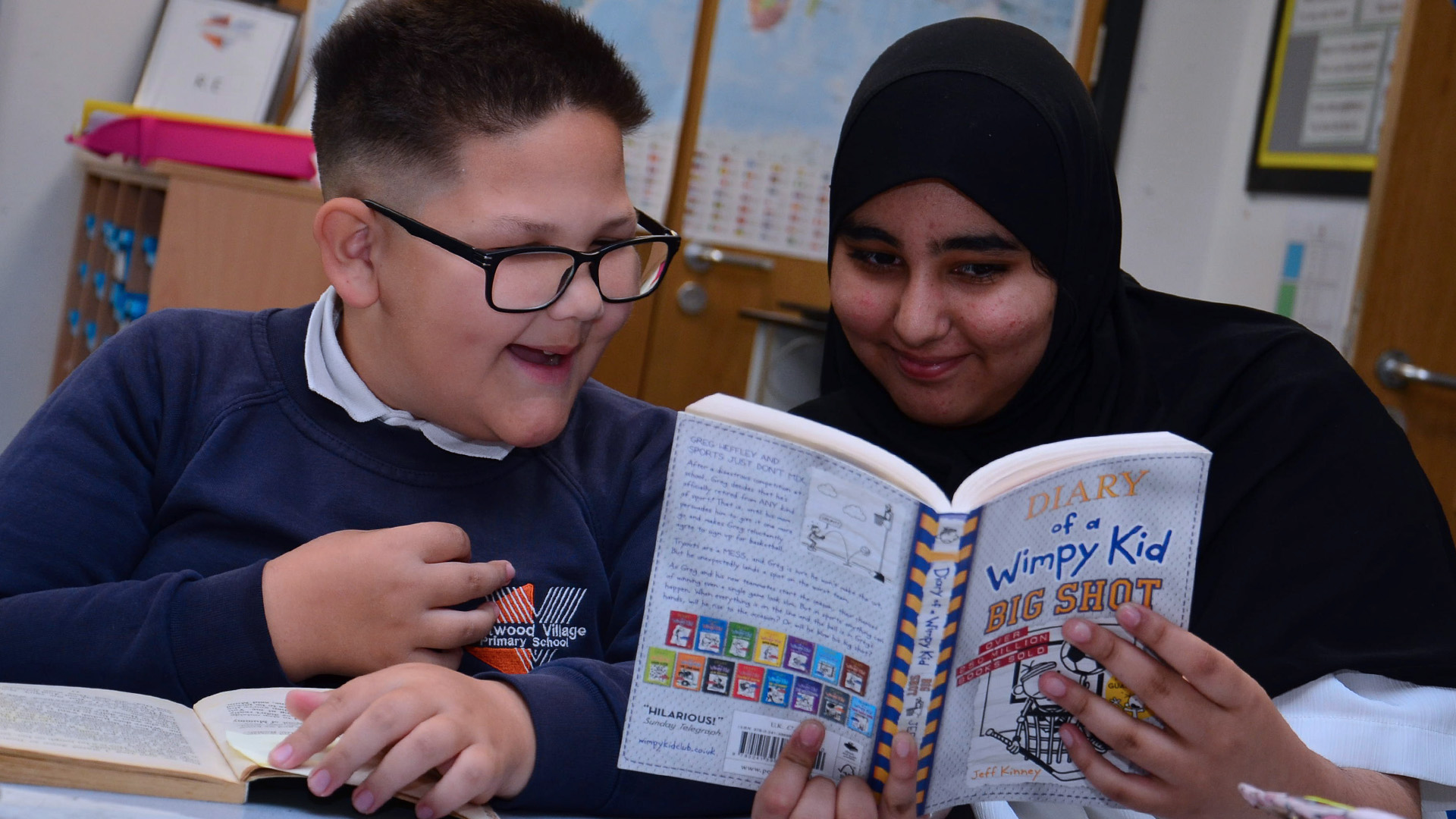
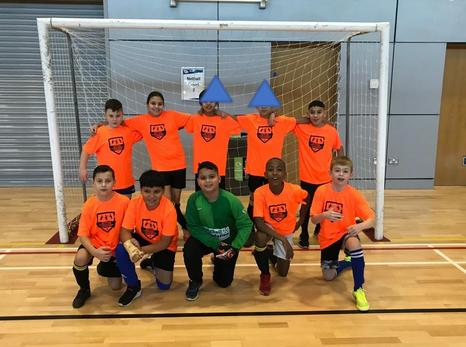
At Eastwood Village Primary School, PE and the promotion of physical activity is a fundamental part of the curriculum. We pride ourselves in facilitating the opportunity for all children to participate in two hours of PE to include physical activity each week.
Within our PE lessons and across the primary phases, we cover the six main areas of the National Curriculum (dance, gymnastics, games, swimming, athletics and outdoor and adventurous activities). Our Year 5 children receive swimming lessons as part of the KS2 curriculum.
We ensure our PE curriculum allows all children to become confident in a wide range of physical activities to promote and sustain a healthy, active life style. We also encourage the children to participate in physical activities during play time and lunch time and develop excellence in their chosen sport to represent their school in competitions.
School sports clubs are offered at different times throughout the year and children are also given chances to take part in local sports festivals and competitions. See our Extra-Curricular Grid. If you would like to take part in any of our before or after school clubs, please speak to school staff.
[tabwrap]
[tab title=”National Curriculum”]
A high-quality physical education curriculum inspires all pupils to succeed and excel in competitive sports and other physically demanding activities. It should provide opportunities for pupils to become physically confident in a way which supports their health and fitness. Opportunities to compete in sports and other activities build character and help to embed values such as fairness and respect.
The national curriculum for physical education aims to ensure that all pupils:
By the end of each key stage, pupils are expected to know, apply and understand the matters, skills and processes specified in the relevant programme of study. 221
Pupils should develop fundamental movement skills, become increasingly competent and confident and access a broad range of opportunities to extend their agility, balance and coordination, individually and with others. They should be able to engage in competitive (both against self and against others) and co-operative physical activities, in a range of increasingly challenging situations.
Pupils should continue to apply and develop a broader range of skills, learning how to use them in different ways and to link them to make actions and sequences of movement. They should enjoy communicating, collaborating and competing with each other. They should develop an understanding of how to improve in different physical activities and sports and learn how to evaluate and recognise their own success.
All schools must provide swimming instruction either in key stage 1 or key stage 2.
In particular, pupils should be taught to:
Please View the national curriculum for Physical Education
[/tab]
[tab title=”Policy”]
[/tab]
[tab title=”Intent, Implementation, Impact”]
[/tab]
[tab title=”Skills, Vocabulary and Knowledge”]
Please view our vocabulary progression here
Year 1 |
Year 2 |
Year 3 |
Year 4 |
Year 5 |
Year 6 |
|
| Dance | Copies and explores basic movements and body patterns
Remembers simple movements and dance steps Links movements to sounds and music. Responds to range of stimuli. |
Copies and explores basic movements with clear control.
Varies levels and speed in sequence Can vary the size of their body shapes Add change of direction to a sequence Uses space well and negotiates space clearly. Can describe a short dance using appropriate vocabulary. Responds imaginatively to stimuli. |
Beginning to improvise independently to create a simple dance.
Beginning to improvise with a partner to create a simple dance. Translates ideas from stimuli into movement with support. Beginning to compare and adapt movements and motifs to create a larger sequence. Uses simple dance vocabulary to compare and improve work. |
Confidently improvises with a partner or on their own.
Beginning to create longer dance sequences in a larger group. Demonstrating precision and some control in response to stimuli. Beginning to vary dynamics and develop actions and motifs. Demonstrates rhythm and spatial awareness. Modifies parts of a sequence as a result of self-evaluation. Uses simple dance vocabulary to compare and improve work. |
Beginning to exaggerate dance movements and motifs (using expression when moving)
Demonstrates strong movements throughout a dance sequence. Combines flexibility, techniques and movements to create a fluent sequence. Moves appropriately and with the required style in relation to the stimulus. e.g using various levels, ways of travelling and motifs. Beginning to show a change of pace and timing in their movements. Uses the space provided to his maximum potential. Improvises with confidence, still demonstrating fluency across their sequence. Modifies parts of a sequence as a result of self and peer evaluation. Uses more complex dance vocabulary to compare and improve work. |
Exaggerate dance movements and motifs (using expression when moving)
Performs with confidence, using a range of movement patterns. Demonstrates a strong imagination when creating own dance sequences and motifs. Demonstrates strong movements throughout a dance sequence. Combines flexibility, techniques and movements to create a fluent sequence. Moves appropriately and with the required style in relation to the stimulus. e.g using various levels, ways of travelling and motifs. Beginning to show a change of pace and timing in their movements. Is able to move to the beat accurately in dance sequences. Improvises with confidence, still demonstrating fluency across their sequence. Dances with fluency, linking all movements and ensuring they flow. Demonstrates consistent precision when performing dance sequences. Modifies parts of a sequence as a result of self and peer evaluation. Uses more complex dance vocabulary to compare and improve work.
|
| Gymnastics | Copies and explores basic movements with some control and coordination.
Can perform different body shapes Performs at different levels Can perform 2 footed jump Can use equipment safely Balances with some control Can link 2-3 simple movements |
Explores and creates different pathways and patterns.
Uses equipment in a variety of ways to create a sequence Link movements together to create a sequence |
Applies compositional ideas independently and with others to create a sequence.
Copies, explores and remembers a variety of movements and uses these to create their own sequence. Describes their own work using simple gym vocabulary. Beginning to notice similarities and differences between sequences. Uses turns whilst travelling in a variety of ways. Beginning to show flexibility in movements Beginning to develop good technique when travelling, balancing, using equipment etc |
Links skills with control, technique, co-ordination and fluency.
Understands composition by performing more complex sequences. Beginning to use gym vocabulary to describe how to improve and refine performances. Develops strength, technique and flexibility throughout performances. Creates sequences using various body shapes and equipment. Combines equipment with movement to create sequences. |
Select and combine their skills, techniques and ideas.
Apply combined skills accurately and appropriately, consistently showing precision, control and fluency. Draw on what they know about strategy, tactics and composition when performing and evaluating. Analyse and comment on skills and techniques and how these are applied in their own and others’ work. Uses more complex gym vocabulary to describe how to improve and refine performances. Develops strength, technique and flexibility throughout performances. Links skills with control, technique, co-ordination and fluency. Understands composition by performing more complex sequences. |
Plan and perform with precision, control and fluency, a movement sequence showing a wide range of actions including variations in speed, levels and directions.
Performs difficult actions, with an emphasis on extension, clear body shape and changes in direction. Adapts sequences to include a partner or a small group. Gradually increases the length of sequence work with a partner to make up a short sequence using the floor, mats and apparatus, showing consistency, fluency and clarity of movement. Draw on what they know about strategy, tactics and composition when performing and evaluating. Analyse and comment on skills and techniques and how these are applied in their own and others’ work. Uses more complex gym vocabulary to describe how to improve and refine performances. Develops strength, technique and flexibility throughout performances.
|
| Games | Can travel in a variety of ways including running and jumping.
Beginning to perform a range of throws. Receives a ball with basic control Beginning to develop hand-eye coordination Participates in simple games |
Confident to send the ball to others in a range of ways.
Beginning to apply and combine a variety of skills (to a game situation) Develop strong spatial awareness. Beginning to develop own games with peers. Understand the importance of rules in games. Develop simple tactics and use them appropriately. Beginning to develop an understanding of attacking/ defending |
Understands tactics and composition by starting to vary how they respond.
Vary skills, actions and ideas and link these in ways that suit the games activity. Beginning to communicate with others during game situations. Uses skills with co-ordination and control. Develops own rules for new games. Makes imaginative pathways using equipment. Works well in a group to develop various games. Beginning to understand how to compete with each other in a controlled manner. Beginning to select resources independently to carry out different skills.
|
Vary skills, actions and ideas and link these in ways that suit the games activity.
Shows confidence in using ball skills in various ways, and can link these together. e.g. dribbling, bouncing, kicking Uses skills with co-ordination, control and fluency. Takes part in competitive games with a strong understanding of tactics and composition. Can create their own games using knowledge and skills. Works well in a group to develop various games. Compares and comments on skills to support creation of new games. Can make suggestions as to what resources can be used to differentiate a game. Apply basic skills for attacking and defending. Uses running, jumping, throwing and catching in isolation and combination. |
Vary skills, actions and ideas and link these in ways that suit the games activity.
Shows confidence in using ball skills in various ways, and can link these together. Uses skills with co-ordination, control and fluency. Takes part in competitive games with a strong understanding of tactics and composition. Can create their own games using knowledge and skills. Can make suggestions as to what resources can be used to differentiate a game. Apply basic skills for attacking and defending. Uses running, jumping, throwing and catching in isolation and combination. |
Vary skills, actions and ideas and link these in ways that suit the games activity.
Shows confidence in using ball skills in various ways, and can link these together effectively. e.g. dribbling, bouncing, kicking Keeps possession of balls during games situations. Consistently uses skills with co-ordination, control and fluency. Takes part in competitive games with a strong understanding of tactics and composition. Can create their own games using knowledge and skills. Modifies competitive games. Compares and comments on skills to support creation of new games. Can make suggestions as to what resources can be used to differentiate a game. Apply knowledge of skills for attacking and defending. Uses running, jumping, throwing and catching in isolation and in combination. |
| Athletics | Can run at different speeds.
Can jump from a standing position Performs a variety of throws with basic control. |
Can change speed and direction whilst running.
Can jump from a standing position with accuracy. Performs a variety of throws with control and co-ordination. preparation for shot put and javelin Can use equipment safely |
Beginning to run at speeds appropriate for the distance.
e.g. sprinting and cross country Can perform a running jump with some accuracy Performs a variety of throws using a selection of equipment. Can use equipment safely and with good control. |
Beginning to build a variety of running techniques and use with confidence.
Can perform a running jump with more than one component. e.g. hop skip jump (triple jump) Demonstrates accuracy in throwing and catching activities. Describes good athletic performance using correct vocabulary. Can use equipment safely and with good control. |
Beginning to build a variety of running techniques and use with confidence.
Can perform a running jump with more than one component. e.g. hop skip jump (triple jump) Beginning to record peers performances, and evaluate these. Demonstrates accuracy and confidence in throwing and catching activities. Describes good athletic performance using correct vocabulary. Can use equipment safely and with good control. |
Beginning to build a variety of running techniques and use with confidence.
Can perform a running jump with more than one component. e.g. hop skip jump (triple jump) Beginning to record peers performances, and evaluate these. Demonstrates accuracy and confidence in throwing and catching activities. Describes good athletic performance using correct vocabulary. Can use equipment safely and with good control.
|
| Outdoor Education | Develops listening skills.
Creates simple body shapes. Listens to instructions from a partner/ adult. Beginning to think activities through and problem solve. Discuss and work with others in a group. Demonstrates an understanding of how to stay safe. |
Develops strong listening skills.
Uses simple maps. Beginning to think activities through and problem solve. Choose and apply strategies to solve problems with support. Discuss and work with others in a group. Demonstrates an understanding of how to stay safe. |
Develops strong listening skills.
Use s and interprets simple maps. Think activities through and problem solve using general knowledge. Choose and apply strategies to solve problems with support. Discuss and work with others in a group. Demonstrates an understanding of how to stay safe. |
Develops strong listening skills.
Use s and interprets simple maps. Think activities through and problem solve using general knowledge. Choose and apply strategies to solve problems with support. Discuss and work with others in a group. Demonstrates an understanding of how to stay safe. |
||
| Swimming | Swims competently, confidently and proficiently over a distance of at least 25 metres
Uses a range of strokes effectively e.g. front crawl, backstroke and breaststroke. Performs safe self-rescue in different water-based situations.
|
|||||
|
Evaluation |
Can comment on own and others performance Can give comments on how to improve performance. Use appropriate vocabulary when giving feedback. |
Watches and describes performances accurately. Beginning to think about how they can improve their own work. Work with a partner or small group to improve their skills. Make suggestions on how to improve their work, commenting on similarities and differences. |
Watches and describes performances accurately. Learn from others how they can improve their skills. Comment on tactics and techniques to help improve performances. Make suggestions on how to improve their work, commenting on similarities and differences. |
|||
| Healthy Lifestyles | Can describe the effect exercise has on the body
Can explain the importance of exercise and a healthy lifestyle.
|
Can describe the effect exercise has on the body
Can explain the importance of exercise and a healthy lifestyle. Understands the need to warm up and cool down.
|
Can describe the effect exercise has on the body
Can explain the importance of exercise and a healthy lifestyle. Understands the need to warm up and cool down. |
|||
[/tab]
[tab title=”Long Term Plan”]
| PE Scheme of Work – Whole School Overview | ||||||
| Foundation Stage | Autumn 1 | Autumn 2 | Spring 1 | Spring 2 | Summer 1 | Summer 2 |
| Games | Using bean- | bags | Using a
sized |
medium
ball |
Hoops and quoits | Using a small ball and bat |
| Gymnastics | Travelling | Body Shape | Travelling & Taking weight on body parts | Travelling & Taking weight on body parts | ||
| Dance | Unit 1
Stars, Rabbits, Follow my Feet, |
Unit 1
Hickory Dickory Dock, Autumn Leaves |
Unit 2
Icicles and water, Mr Jelly and Mr Strong, |
Unit 2
Wriggling William, Angry Elephant, |
Unit 3
Blowing Bubbles, Dinosaurs, The Shaking Puppet |
Unit 4
The scarf, Painting a picture, The Hungry Caterpillar |
The following units of work enhance or support the delivery of the Foundation Stage Curriculum & enable the pillars of progression to be implemented to meet the associated FS endpoints.
| Year 1 | Autumn 1 | Autumn 2 | Spring 1 | Spring 2 | Summer 1 | Summer 2 |
| Games | Using a large ball | Throwing and catching | Aiming games (link with Aut 2) | Skipping
Bat and ball skills |
Skipping
Bat and ball skills |
Develop partner work |
| Gymnastics | Travelling | Stretching and curling | Travelling taking weight on different parts | Flight | Rocking and rolling | Linking movements together |
| Dance | Unit 1
Streamers, Conkers, Playing with a Ball |
Unit 2
March, March, March Jack and the Beanstalk |
Unit 3
Fog and Sunshine, Washing Day, |
Unit 3
Handa’s Surprise |
Unit 4
The Rainbow Fish |
Unit 4
We’re going on a Bear Hunt |
The following units of work enhance or support delivery of the Y1 Curriculum & enable the pillars of progression to be implemented to meet the associated Y1 end points.
Focus: – Pathways, directions, spatial dimensions and sequence composition.
Focus:-controlled movements, Pathways/speeds/levels, Use of space and Sequence development.
Focus:-Using skill development in the context of basic and small scale game
| Year 2 | Autumn 1 | Autumn 2 | Spring 1 | Spring 2 | Summer 1 | Summer 2 |
| Games | Throwing catching | and inventing individual games | Making games with a partner | Dribbling, kicking and hitting | Group inventing | games and rules |
| Gymnastics | Points and patches | Wide narrow curled | Parts high and parts low | Pathways | Spinning, turning and twisting | Linking movements
Together |
| Dance | Unit 1
The Cat, Balloons, Reach for the Stars |
Unit 2
Friends, Bubbles, Shadows |
Unit 3
Words and Word Messages |
Unit 3
Three Little Pigs |
Unit 4
Copy Cat, Pat-1-Cake Polka, Jumping Joan, Elsden Circle |
Unit 4
Anything Goes, Galopede, Circassian Circle |
The following units of work enhance or support the delivery of the Y2 Curriculum & enable the pillars of progression to be implemented to meet the associated Y2 endpoints.
Focus: – Contrasts in speed/force/levels/directions,
Focus:-Quality/diversity of movements, Sequence development involving linking movements
Focus:-Using skill development in the context of small team & group games
| Year 3 | Autumn 1 | Autumn 2 | Spring 1 | Spring 2 | Summer 1 | Summer 2 |
| Games | Passing and receiving | Net/court games
|
Creative games
|
Striking and fielding
|
Striking and fielding
|
Athletics
|
| Gymnastics | Stretching and | Curling 2 | Symmetry and Asymmetry | Pathways 2 | Traveling with the change of face and direction | |
| Dance | Unit 1
Who am I, The Language of dance |
Unit 2
The Explorers, Hornpipe |
Unit 3
The Eagle and the Fish |
Country Dance / Tudor dance |
Unit 4
Mechanical Progress |
Unit 4
The Human Engine |
The following units of work enhance or support the delivery of the Y3 Curriculum & enable the pillars of progression to be implemented to meet the associated Y3 endpoints.
Focus: – Consolidation of body actions/ pathways/speed variation
Focus: Body shape, levels, balance, sequence development & pathway
Focus: Skills used/ developed in Invasion Games, Striking & Fielding, Net Games
| Year 4 | Autumn 1 | Autumn 2 | Spring 1 | Spring 2 | Summer 1 | Summer 2 |
| Games | Invasion games | Net/wall games | Problem-solving and inventing games | Striking and fielding | Striking and fielding | Athletics |
| Gymnastics | Balance | Receiving body | Weight | Balance/change of face and direction | Rolling | |
| Dance | Unit 1
The shoes are made for walking, Giraffes can’t dance, Incognito |
Unit 2
Electricity Rock & roll
|
Record and Remember |
Country Dance / Tudor dance
|
Unit 3
Snooker Championships Unit 4 Wimbledon |
Unit 4
Musical Statues Olympics- fan fare for the common people |
The following units of work enhance or support the delivery of the Y4 Curriculum& enable the pillars of progression to be implemented to meet the associated Y4 endpoints.
Focus: – Clarity of body shape, movement gesture, stylization & partner work.
Focus: Balance, Transferring/ receiving weight & sequence development/evaluation
Focus: Skills used and developed in Invasion Games, Striking & Fielding Net/ wall
| Year 5 | Autumn 1 | Autumn 2 | Spring 1 | Spring 2 | Summer 1 | Summer 2 |
| Games | Invasion games (implement and kicking) | Net court games | Invasion and target (ball handling) | Striking and fielding | Athletics | |
| Gymnastics | Flight | Matching and Mirroring | Bridges | Turning and spinning | ||
| Dance | Unit 1
Rubbish, Country Dance / Tudor dance |
Unit 2
What a card! Word Power
|
Unit 3
City Life
|
Unit 3
Hello!
|
Unit 4
Volcanoes
|
Unit 4
Punch and Wrestle
|
| Swimming activities& water safety are taught within the Year 5 PE Curriculum | ||||||
The following units of work enhance or support the delivery of the Y5 Curriculum& enable the pillars of progression to be implemented to meet the associated Y5 endpoints.
Focus – Exploring ideas, improvising movements, development of complex dance phrases
Focus – Transferring/receiving weight, body shape with change of direction/level
Skills used and developed in Invasion Games, Striking & Fielding, Net/ wall
| Year 6 | Autumn 1 | Autumn 2 | Spring 1 | Spring 2 | Summer 1 | Summer 2 |
| Games | Invasion (implement and kicking) (hockey and soccer) | Invasion games (ball handling netball/ basketball/ rugby) | Net / wall games (tennis) | Striking and fielding | Striking and fielding | Athletics
0AA
|
| Gymnastics | Counterbalance and countertension | Holes and barriers | Functional use of arms | Synchronisation and canon | ||
| Dance | Unit 1
World of sport, Mix and Match |
Unit 2
Theseus and the Minotaur, Cat’s cradle |
Unit 3
The Rainforest |
Unit 3
Hunting in unknown Territory |
Unit 4
Flight from Danger |
Country Dance / Tudor Dance |
The following units of work enhance or support the delivery of the Y6 Curriculum & enable the pillars of progression to be implemented to meet the associated Y6 endpoints.
Focus: – Working within a large group and structure and composition of dance.
Focus: -transferring/ receiving weight, balance and links to dance phrases.
Focus: – Skills used and developed in Invasion Games, Striking & Fielding activities & Net Wall games
[/tab]
[tab title=”Related Documents”]
[card title=”Related Documents”]
Creating Active Schools Project
PE curriculum research overview

Below is some information on Hygiene and healthy eating:
[/card]
[/tab]
[tab title=”Staff Training”]
PE Staff Meeting November 2022
[/tab]
[tab title=”End Points”]
Understand the importance of warming up and cooling down for physical activity
Swimming
Swim 25 metres confidently.
Use a range of swimming strokes
Perform safe self-rescue activities in different water based situations.
[/tab]
[/tabwrap]